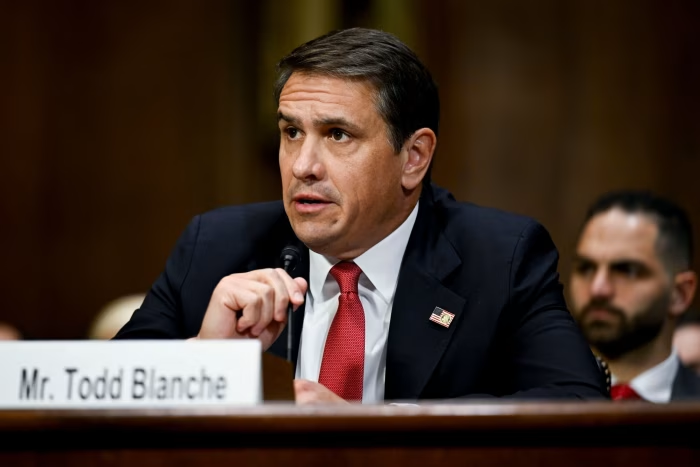
The leadership of the U.S. Department of Justice (DOJ) has taken a dramatic turn, with Todd Blanche stepping in as interim Attorney General following a decision by Donald Trump. This move has sparked widespread discussion—not only because of Blanche’s close ties to Trump, but also due to his controversial stance on cryptocurrency regulation.
Blanche’s appointment comes at a time when the relationship between government oversight and the crypto industry is under intense scrutiny. His past actions, policy decisions, and financial disclosures are now being closely examined, raising important questions about ethics, regulation, and the future of digital assets in the United States.
A Sudden Leadership Change at the DOJ
The transition in leadership occurred after Trump removed Pam Bondi from her position as Attorney General. In her place, Blanche—who had been serving as Deputy Attorney General—was elevated to lead the department on an interim basis.
Blanche is no stranger to Trump. Before joining the administration, he acted as Trump’s personal attorney during a high-profile criminal case in New York. Following Trump’s return to office in 2024, Blanche was appointed to a senior role within the DOJ, positioning him for this latest promotion.
Why this appointment matters:
- It strengthens Trump’s influence over the Justice Department
- It places a trusted ally in a powerful legal position
- It signals potential shifts in enforcement priorities
Blanche’s Controversial Crypto Policies
One of the most debated aspects of Blanche’s tenure has been his approach to cryptocurrency regulation.
During his time as Deputy Attorney General, Blanche made a bold decision to dismantle the DOJ’s crypto enforcement infrastructure.
Key policy changes include:
- Disbanding the National Cryptocurrency Enforcement Team (NCET)
- Directing prosecutors to avoid pursuing certain crypto-related regulatory violations
- Issuing a memo that reshaped how crypto cases are handled
The NCET, originally created in 2022 under the previous administration, was designed to tackle illicit activities in the digital asset space. Its removal marked a significant shift in enforcement strategy.
Impact on High-Profile Crypto Cases
Blanche’s policy changes didn’t just stay on paper—they had real-world consequences.
One notable example involved the case against Roman Storm, a developer linked to the crypto mixing service Tornado Cash.
Effects of Blanche’s memo:
- Prosecutors dropped at least one charge in the case
- Legal strategies shifted due to updated enforcement guidelines
- The broader approach to crypto-related prosecutions became less aggressive
Although Storm still faced legal challenges, including a conviction on one count and upcoming retrials, the case highlighted how policy decisions at the top can influence outcomes in the courtroom.
Ethics Concerns Over Crypto Holdings
Beyond policy decisions, Blanche’s financial disclosures have added another layer of controversy.
According to official records, Blanche held a range of cryptocurrency assets before and during his time in government.
Reported holdings included:
- Bitcoin
- Ethereum
- Solana
- Cardano
- Polygon
- Polkadot
- Quant
- Shares in Coinbase
Although Blanche claimed to transfer these assets to family members, reports suggest he still retained holdings valued between $159,000 and $485,000 when he signed a key crypto enforcement memo.
Potential Violation of Ethics Rules
This revelation has raised serious ethical questions.
Key concerns:
- Blanche had pledged to divest from crypto assets before handling related matters
- Retaining these holdings could represent a conflict of interest
- His policy decisions may have indirectly benefited his financial interests
Critics argue that even indirect ownership—through family members—could influence decision-making, especially in a rapidly evolving market like cryptocurrency.
A Shift in the U.S. Crypto Regulatory Landscape
Blanche’s leadership signals a broader transformation in how the U.S. government approaches crypto regulation.
Possible implications:
- Reduced enforcement pressure: Fewer regulatory cases may encourage innovation
- Increased industry confidence: Crypto firms could see this as a more favorable environment
- Heightened political scrutiny: Critics may push for stronger oversight and accountability
This shift reflects a growing divide between those who support a more open crypto market and those who advocate for stricter regulation.
Balancing Innovation and Oversight
The debate surrounding Blanche’s appointment highlights a key challenge: finding the right balance between fostering innovation and ensuring accountability.
Supporters argue:
- Reduced enforcement allows the crypto industry to grow
- Overregulation could stifle technological advancement
Critics counter:
- Lack of oversight increases the risk of fraud and misuse
- Ethical concerns undermine trust in government institutions
This tension is likely to shape policy discussions in the coming months.
What to Watch Going Forward
As Blanche takes on his new role, several developments will be worth monitoring:
Key areas to watch:
- Future DOJ actions related to crypto enforcement
- Investigations into potential ethics violations
- Legislative responses from Congress
- Market reactions within the crypto industry
These factors will determine whether Blanche’s leadership leads to lasting change or further controversy.
Conclusion: A Defining Moment for Crypto and Justice
Todd Blanche’s rise to interim Attorney General marks a pivotal moment for both the U.S. justice system and the cryptocurrency industry. His decisions have already reshaped enforcement priorities, while his financial disclosures have sparked debate over ethics and accountability.
As the lines between politics, law, and digital finance continue to blur, this situation underscores the importance of transparency and trust. Whether Blanche’s approach ultimately benefits the crypto sector or creates new challenges remains to be seen.
What is clear, however, is that the future of crypto regulation in the United States is entering a new and uncertain phase—one that will be closely watched by investors, policymakers, and the global financial community alike.